Crypto Trading Terms for Beginners Explained Simply
Learn the essential crypto trading terms for beginners including market orders, stop-loss, leverage, spread, and slippage with practical examples. Start trading with confidence.

Crypto Trading Terms for Beginners Explained Simply
Crypto trading terms for beginners can feel overwhelming, but mastering a handful of key concepts will help you read charts, place orders, and manage risk with confidence. This guide breaks down the essential vocabulary every new trader needs, using clear explanations and real-world examples so you can start trading smarter.
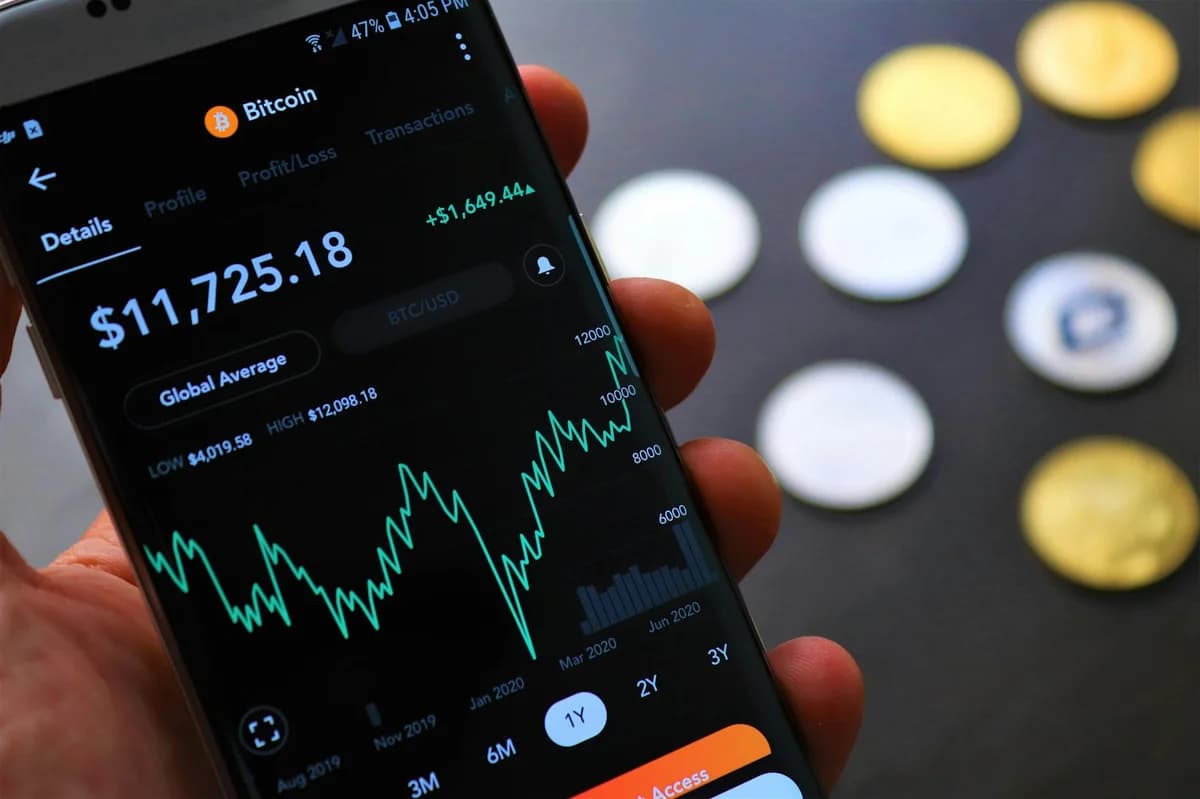
Why Learning Crypto Trading Terms for Beginners Matters
Jumping into crypto without knowing the language is like trying to fix a car engine in a foreign country. You might get lucky, but misunderstandings lead to costly mistakes. Whether you're buying your first Bitcoin or experimenting with altcoins, understanding terms like limit order, spread, and liquidation helps you avoid traps and execute trades more effectively.
The Order Book: Market Orders vs. Limit Orders
Every exchange displays an order book – a real-time list of buy and sell orders. When you trade, you choose between two basic order types:
- Market order – You buy or sell immediately at the current best available price. Example: Bitcoin is trading at $30,000. You place a market order to buy 0.1 BTC. The exchange fills your order instantly at the best ask price, say $30,010. You pay a small premium for speed.
- Limit order – You set a specific price at which you want to trade. Example: You want to buy Ethereum, but only if it drops to $2,000. You place a limit buy order at $2,000. The order sits in the book until ETH hits that level. If it never does, your order expires unfilled.
Bold key: Using limit orders gives you price control; market orders guarantee speed but may cost slightly more.
Bid, Ask, and Spread: The Price Gap
Every trading pair has two prices:
- Bid – The highest price a buyer is willing to pay.
- Ask – The lowest price a seller is willing to accept.
- Spread – The difference between bid and ask.
Example: On a BTC/USDT pair, the bid might be $29,998 and the ask $30,002. The spread is $4. A narrow spread means high liquidity (easy to trade); a wide spread often signals low liquidity or high volatility.
| Term | Definition | Why It Matters |
|---|---|---|
| Bid | Highest buyer's price | You sell at this price |
| Ask | Lowest seller's price | You buy at this price |
| Spread | Ask minus bid | Lower spread = cheaper trades |
Stop-Loss and Take-Profit: Risk Management Tools
Crypto trading terms for beginners wouldn't be complete without these two safety nets. A stop-loss order automatically sells your position if the price falls to a certain level, limiting your downside. A take-profit order locks in gains by selling when the price reaches your target.
Practical example: You buy 1 ETH at $2,500. You set a stop-loss at $2,350 (protecting against a 6% drop) and a take-profit at $2,800 (aiming for 12% gain). If ETH surges to $2,800, your take-profit triggers and you pocket the profit. If it crumbles to $2,350, the stop-loss closes your position, saving you from deeper losses.
Bold key: Never trade without stop-losses, especially in crypto where 10–20% daily swings are normal.
Leverage and Margin Trading
Leverage allows you to control a larger position with a smaller amount of capital. For example, with 10x leverage, a $100 deposit gives you $1,000 buying power. Gains and losses are magnified accordingly.
- Margin – The collateral you put up (e.g., $100).
- Liquidation – If the market moves against you and your position value falls below the maintenance margin, the exchange automatically closes your position to prevent further losses.
Warning: Leverage is a double-edged sword. A 10% price drop against a 10x leveraged long position can wipe out your entire margin. Beginners should avoid leverage until they fully understand liquidation mechanics.
Liquidity and Slippage
Liquidity describes how easily an asset can be bought or sold without affecting its price. High-liquidity pairs (like BTC/USDT) have many buyers and sellers, so orders fill quickly at stable prices. Low-liquidity coins (obscure altcoins) may take longer to fill and cause major price swings when you trade.
Slippage occurs when your order executes at a different price than expected due to market movement or low liquidity. Example: You place a market buy for 100 UNI tokens at $5.00, but by the time the order fills, the price jumps to $5.20. You pay $0.20 extra per token – that's slippage.
Bold key: Limit orders eliminate slippage; market orders are vulnerable to it in volatile or illiquid markets.
Common Chart Terms Every Beginner Should Know
Candlesticks and Trends
A candlestick displays price movement over a specific time period (e.g., 1 hour). Each candlestick has four data points: open, high, low, close. Green or white candles indicate price increase; red or black candles indicate decrease.
Trend – The general direction of price movement. Uptrend (higher highs and higher lows) is bullish; downtrend (lower highs and lower lows) is bearish.
Support and Resistance
- Support – A price level where buying pressure is strong enough to prevent further decline. Like a floor.
- Resistance – A price level where selling pressure halts upward movement. Like a ceiling.
Example: Bitcoin repeatedly bounces off $28,500 (support) and gets rejected at $30,200 (resistance). Traders watch these levels to decide entry and exit points.
Volume and Volatility
- Volume – The total amount of an asset traded in a given period. Rising volume confirms a trend; falling volume may signal a reversal.
- Volatility – The rate of price change. High volatility means large, rapid price moves; low volatility indicates steady, small moves.
Bold key: Beginners should favor high-volume, moderately volatile coins to reduce risk of unpredictable crashes.
A Practical Trading Scenario
Let's walk through a typical beginner trade using terms you've learned:
- You check the BTC/USDT chart. You see support at $29,000 and resistance at $30,500.
- You decide to buy when Bitcoin touches $29,200 (a limit order). You set a stop-loss at $28,500 (below support) and a take-profit at $30,400 (just below resistance).
- Your limit order fills at $29,200. The spread at that moment is $10 (bid $29,195, ask $29,205). You paid the ask price.
- Over the next two days, Bitcoin rallies to $30,400. Your take-profit triggers, and you sell. Your net profit: ($30,400 – $29,200) × position size, minus exchange fees.
- Had the price instead dropped to $28,500, your stop-loss would have saved you from a larger loss.
This structured approach reduces emotional trading and keeps your risk manageable.
Final Tips for Mastering Crypto Trading Terms for Beginners
- Paper trade first – Use demo accounts or small amounts to practice order types and risk management.
- Bold key: Never invest money you cannot afford to lose – crypto is inherently volatile.
- Keep a trading journal – Record what terms you used, entries, exits, and outcomes. Over time, patterns emerge.
- Avoid jargon overload – Focus on 10–15 core terms initially. As you trade, new terms will become clear through context.
Crypto trading terms for beginners are not a secret code – they're tools that give you control. Start with the basics, stay disciplined, and let experience build your fluency. The market will always have new lessons, but with a solid vocabulary, you'll be ready to learn them.