What Are BRC-20 Tokens on Bitcoin? A Beginner's Guide
Learn what BRC-20 tokens on Bitcoin are, how they work with Ordinals, and the risks involved. A beginner-friendly guide with practical examples.
What Are BRC-20 Tokens on Bitcoin? A Beginner's Guide
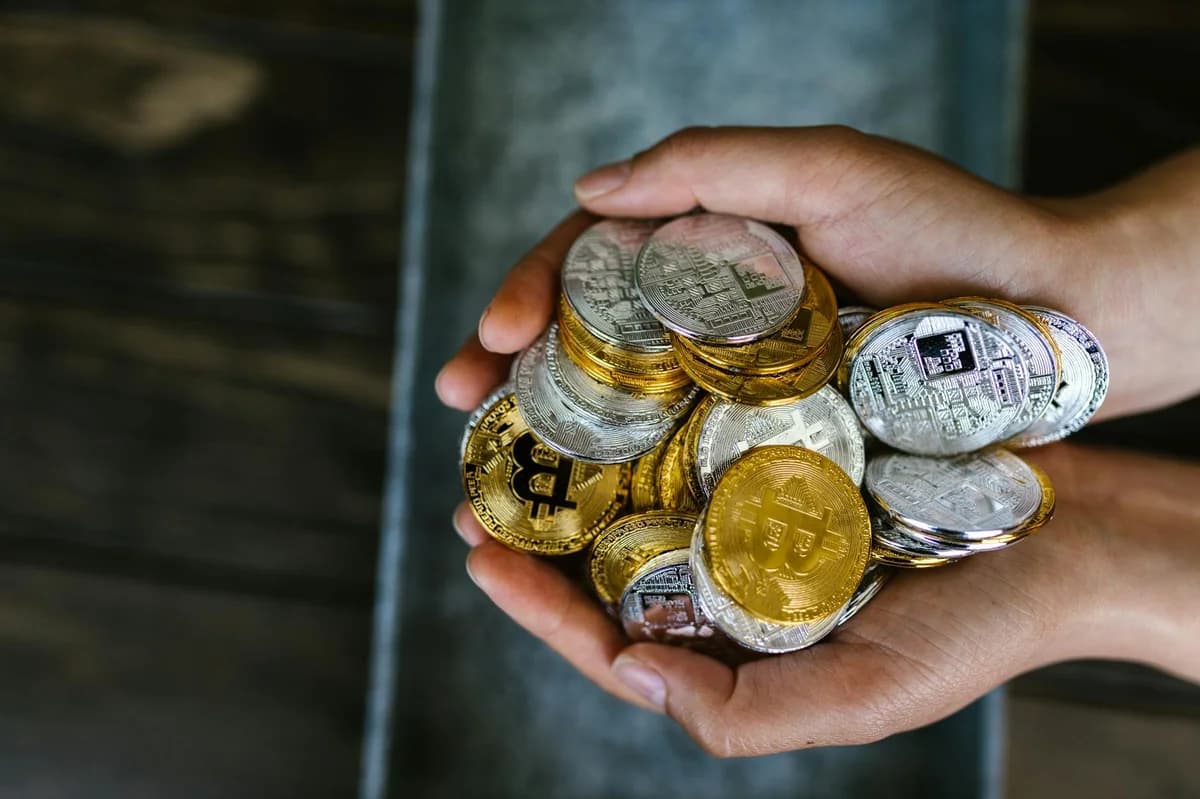
BRC-20 tokens are a new type of digital asset that lives directly on the Bitcoin blockchain, using a system called Ordinals to attach data to individual satoshis (the smallest unit of Bitcoin). Unlike Bitcoin’s native currency (BTC), which is used for peer-to-peer payments, BRC-20 tokens represent experimental, often meme-driven coins that can be created, transferred, and traded by anyone. This guide breaks down what BRC-20 tokens are, how they work, and what beginners need to know before interacting with them.
Understanding BRC-20 Tokens on Bitcoin
To grasp BRC-20 tokens, you first need to understand the Ordinals protocol. Ordinals assigns a unique serial number to every satoshi (called an “ordinal”) and lets users “inscribe” arbitrary data — text, images, or code — onto those satoshis. A BRC-20 token is simply a JSON-formatted text inscription that follows a specific standard: it defines a token’s name, total supply, and the rules for minting and transferring it.
Key difference from native BTC: Bitcoin transactions move BTC from one address to another. BRC-20 transactions, on the other hand, manipulate a token’s “balance” by inscribing JSON instructions on the blockchain. These tokens aren’t built into Bitcoin’s core code; they exist as “social consensus” between users who agree to follow the BRC-20 standard.
| Aspect | Native Bitcoin (BTC) | BRC-20 Tokens |
|---|---|---|
| Technology | Built into Bitcoin's protocol | An overlay using Ordinals inscriptions |
| How it moves | Direct transfer of value | JSON instructions that update a token indexer |
| Security | Secured by Bitcoin miners | Inherits Bitcoin security, but indexer integrity is user-dependent |
| Use case | Digital money, store of value | Experimental tokens, memecoins, community assets |
How BRC-20 Tokens Are Created and Transferred
The BRC-20 standard defines three core actions: deploy, mint, and transfer. Each action is performed by making a Bitcoin transaction that contains an inscribed JSON message.
- Deploy: The creator inscribes a JSON object specifying the token’s ticker (e.g., “ORDI”), total supply (e.g., 21 million), and limit per mint (e.g., 1,000 tokens per mint). This inscription becomes the token’s “contract.”
- Mint: Users inscribe a “mint” JSON referencing the deployed token ID and the amount they want to claim. The token’s balance is updated in the BRC-20 indexer (a separate software that tracks all these inscriptions).
- Transfer: To send tokens, a user inscribes a “transfer” JSON that deducts from their balance and credits another address. The receiving address can then verify the transfer using the indexer.
Important: None of these operations change Bitcoin’s UTXO model directly. Instead, they rely on an external indexer that scans the blockchain and maintains a ledger of BRC-20 balances. This means if the indexer is lost or corrupted, the token records could become inaccessible.
A Practical Example
Imagine a project called “PizzaToken” (ticker: PIZZA). The developer deploys it with a supply of 10,000 tokens and a mint limit of 100 per transaction. A user named Alice inscribes a mint action and gets 100 PIZZA. She later sends 50 PIZZA to Bob by inscribing a transfer instruction. Bob checks a BRC-20 indexer website and sees his balance increase.
📝 Note: Because every mint or transfer requires a Bitcoin transaction with its associated fee, BRC-20 operations can become very expensive when the network is congested. Fees are paid in BTC, not in the token itself.
Practical Examples of BRC-20 Tokens
Several BRC-20 tokens gained attention in 2023 and 2024. The most notable are:
- ORDI: Often called the first BRC-20 token, ORDI was deployed as a proof-of-concept with a supply of 21 million — the same as Bitcoin.
- SATS: A token claiming to represent the smallest unit of Bitcoin (a satoshi) in a “wrapped” form on the Ordinals standard.
- PEPE (BRC-20 variant): A meme-inspired token based on the popular Pepe the Frog image.
These tokens are predominantly memecoins — they have no intrinsic utility beyond speculation and community enthusiasm. However, their existence demonstrates that Bitcoin can host a token ecosystem without changing its own codebase.
| Token | Ticker | Deploy Date (approximate) | Total Supply | Notable Feature |
|---|---|---|---|---|
| ORDI | ORDI | March 2023 | 21,000,000 | First BRC-20 token |
| SATS | SATS | March 2023 | 2,100,000,000,000 | Named after Bitcoin's unit |
| VMPX | VMPX | May 2023 | 1,000,000 | Created by Ordinals developer |
Risks and Challenges of Using BRC-20 Tokens
While exciting, BRC-20 tokens come with significant risks that beginners must understand.
Network Congestion and High Fees
Each BRC-20 inscription creates a Bitcoin transaction. During periods of high demand, the Bitcoin mempool becomes clogged, driving up transaction fees for everyone. In extreme cases, sending a simple BRC-20 transfer can cost more in BTC fees than the token’s market value.
Lack of Smart Contract Functionality
Unlike Ethereum’s ERC-20 standard, BRC-20 tokens cannot be used in automated smart contracts or decentralized exchanges (DEXes) directly. There are no liquidity pools, no staking, and no programmable logic. All trading happens manually or through centralized marketplaces, which introduces counterparty risk.
Indexer Dependency
Your BRC-20 balance exists only in the eyes of a third-party indexer. If the main indexer (e.g., the one at ordinals.com or an alternative) goes offline or is manipulated, token balances could be disputed. The community relies on multiple indexers agreeing on the “canonical” state.
Spam and Dust Attacks
Because anyone can inscribe data, the Bitcoin blockchain has seen a surge of inscription spam — low-value, low-quality inscriptions that bloat the network. While this doesn’t harm Bitcoin’s security, it forces full nodes to store more data, potentially increasing hardware requirements.
Conclusion
BRC-20 tokens are an experimental, user-driven extension of Bitcoin that proves the blockchain can host more than just monetary transactions. They offer a glimpse into a future where Bitcoin double-checks its role as a settlement layer for various assets. However, beginners should approach them with caution: high fees, lack of smart contracts, and reliance on external indexers make BRC-20 tokens riskier than buying and holding Bitcoin itself. As with any emerging technology, only invest time and money you can afford to lose, and always verify transactions through multiple indexers.
RELATED ARTICLES

A rug pull is a crypto scam where developers abandon a project after taking investors' money. These schemes exploit trust and hype to create a false sense of legitimacy before vanishing. Understanding how rug pulls work is essential for protecting your funds in decentralized finance (DeFi) and token markets.
Algorand and Pure Proof of Stake: A Beginner's Guide