What Is a Bitcoin UTXO? Unspent Transaction Output Explained
Learn what a Bitcoin UTXO is, how unspent transaction outputs work with practical examples, and why they make Bitcoin secure. Perfect for crypto beginners.
What Is a Bitcoin UTXO? Unspent Transaction Output Explained
Bitcoin UTXO (Unspent Transaction Output) is a fundamental building block of how Bitcoin transactions work. Unlike a bank account that simply tracks a number, Bitcoin's ledger records discrete chunks of value called UTXOs. This guide breaks down what UTXOs are, how they operate in real transactions, and why they make Bitcoin uniquely secure.
How Bitcoin UTXOs Differ from Account Balances
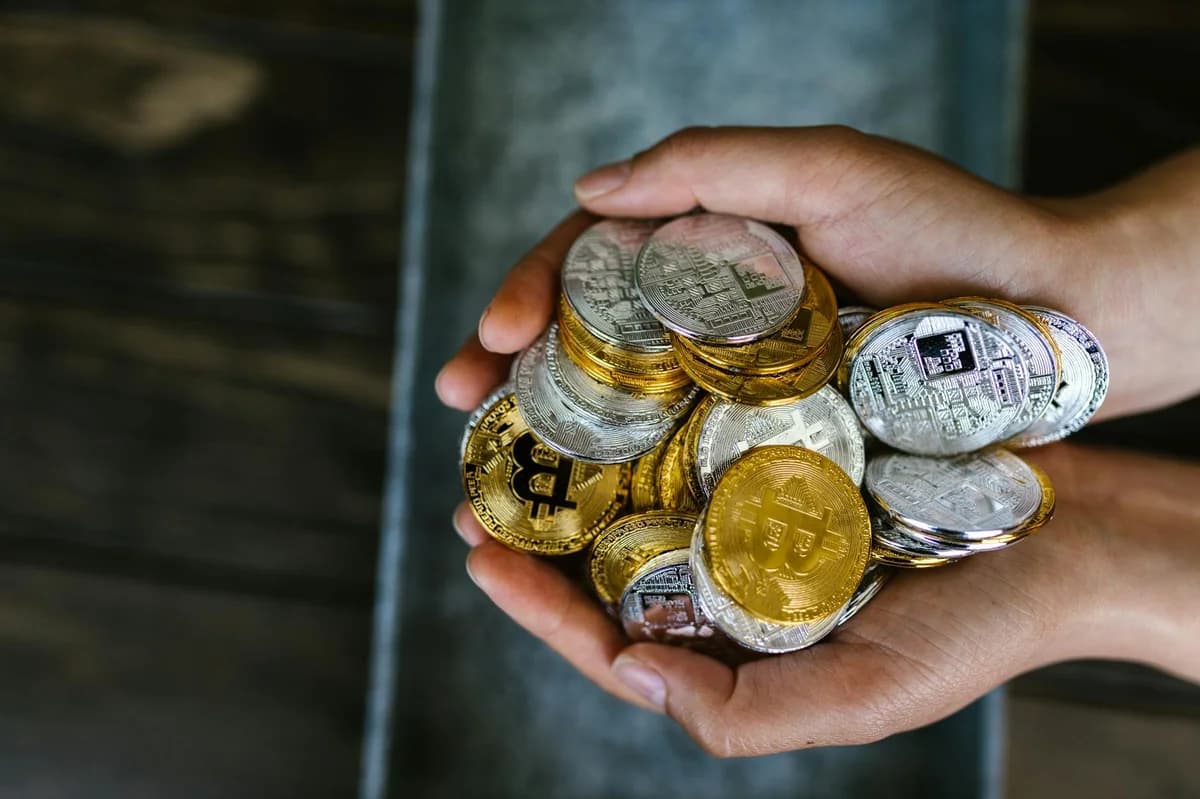
In a traditional bank account or an account‑based blockchain like Ethereum, your balance is a single number stored on a ledger — deposits add to it, withdrawals subtract from it. Bitcoin uses a completely different model based on UTXOs. Instead of one balance, your wallet contains a collection of unspent outputs, each with its own value and ownership conditions. Think of it like physical cash: you might have a £10 bill, two £5 bills, and a handful of coins. Your total wealth is the sum, but you cannot spend a "portion" of a single bill — you must use whole bills and receive change. Similarly, each Bitcoin UTXO is a discrete digital coin that must be spent entirely; the transaction creates new UTXOs as change.
| System | Balance Representation | Spending Mechanism |
|---|---|---|
| Account-based (e.g., bank, Ethereum) | Single numerical balance | Debit amount from balance, credit to recipient |
| UTXO-based (Bitcoin) | Set of unspent outputs | Consume one or more UTXOs entirely, create new UTXOs |
Understanding the Structure of a Bitcoin UTXO
Every Bitcoin UTXO contains three essential pieces of data:
- Amount — the value in satoshis (100 million satoshis = 1 Bitcoin).
- Locking script (scriptPubKey) — a cryptographic condition that must be satisfied to spend the UTXO, typically requiring a digital signature from the owner's private key.
- Reference — the transaction ID (TXID) and output index (vout) that identify which previous transaction created this UTXO.
How UTXOs Are Born and Die
When you receive Bitcoin, the sender's transaction creates a new UTXO that belongs to you. That UTXO remains unspent until you include it as an input in a new transaction. At that moment, the network marks it as spent and removes it from the set of spendable outputs. The new transaction then creates one or more fresh UTXOs for the recipients (including any change that goes back to you). This cycle — consuming old UTXOs, producing new ones — is the heartbeat of Bitcoin's ledger.
Practical Example: Sending Bitcoin Using UTXOs
Imagine Alice wants to send 0.6 BTC to Bob. Her wallet holds two UTXOs:
- UTXO A: 0.5 BTC (from a previous payment)
- UTXO B: 0.3 BTC (from another payment)
Her total unspent balance is 0.8 BTC, but she cannot send only 0.6 BTC from a single UTXO because each output must be spent in full. Instead, her wallet selects both UTXOs as inputs (total 0.8 BTC). The transaction creates:
- Output 1: 0.6 BTC to Bob's address (a new UTXO for Bob).
- Output 2: 0.1999 BTC back to Alice's change address (a new UTXO for Alice).
- The remaining 0.0001 BTC is the transaction fee — it is not an output and gets collected by the miner.
After the transaction, UTXO A and UTXO B are spent and can never be used again. Alice now owns one new UTXO worth 0.1999 BTC. This is exactly like paying for a £25 item with a £20 note and a £10 note — you hand over both and receive £5 in change.
💡 Pro Tip: To reduce fees and improve privacy, consolidate many small UTXOs into one larger UTXO during a low‑fee period. This practice, called UTXO consolidation, saves you money when network fees rise because each input adds bytes to the transaction.
Why Bitcoin Uses UTXOs — Security and Transparency
The Bitcoin UTXO model provides several advantages over account‑based systems:
- Double‑spend prevention — Each UTXO can be spent only once. The network rejects any attempt to reuse the same UTXO, making it impossible to counterfeit or duplicate funds.
- Enhanced privacy — Because every transaction creates fresh addresses for outputs, it is harder for observers to link payments to a single user compared to reusing the same address in an account model.
- Parallel validation — UTXOs are independent; nodes can verify them concurrently, improving transaction processing efficiency.
This design is a key reason Bitcoin's ledger is considered exceptionally secure against certain manipulation attacks that account‑based chains face.
UTXOs and Transaction Fees
Transaction fees are simply the difference between the total value of your inputs (the UTXOs you consume) and the total value of your outputs (the new UTXOs you create). If your inputs sum to 1 BTC and you create outputs totalling 0.9998 BTC, the 0.0002 BTC difference becomes the miner's fee. Wallets handle this calculation automatically, but understanding UTXOs helps you see why having many tiny outputs can lead to higher fees — each input adds data to the transaction, and fees are priced per byte. For a detailed technical explanation, see the Bitcoin developer guide on transactions.
Common Misconceptions About Bitcoin UTXOs
- "My wallet shows a balance, so UTXOs don't matter." Your wallet computes that balance by summing all UTXOs it can unlock. The blockchain itself knows only UTXOs, not balances.
- "I can send a specific UTXO to a recipient." You cannot choose which UTXO arrives in the recipient's wallet. The transaction creates brand‑new UTXOs for them; you simply designate which of your UTXOs to consume.
- "UTXOs are exactly like physical coins." The analogy is close but not perfect: you can split a UTXO only by spending it entirely and creating smaller UTXOs. You cannot "break" a UTXO without a full transaction.
Conclusion
Bitcoin UTXO (Unspent Transaction Output) is the core mechanism that enables secure, transparent, and trustless value transfer on the Bitcoin network. By treating every unit of value as a discrete, independently verifiable output, Bitcoin avoids the vulnerabilities of account‑based ledgers and achieves strong guarantees against double‑spending. Whether you are a beginner or an experienced user, understanding UTXOs helps you make smarter decisions about wallet management, fee optimization, and privacy. For the original vision behind this design, refer to the Bitcoin whitepaper.
RELATED ARTICLES

A rug pull is a crypto scam where developers abandon a project after taking investors' money. These schemes exploit trust and hype to create a false sense of legitimacy before vanishing. Understanding how rug pulls work is essential for protecting your funds in decentralized finance (DeFi) and token markets.

Algorand and Pure Proof of Stake: A Beginner's Guide