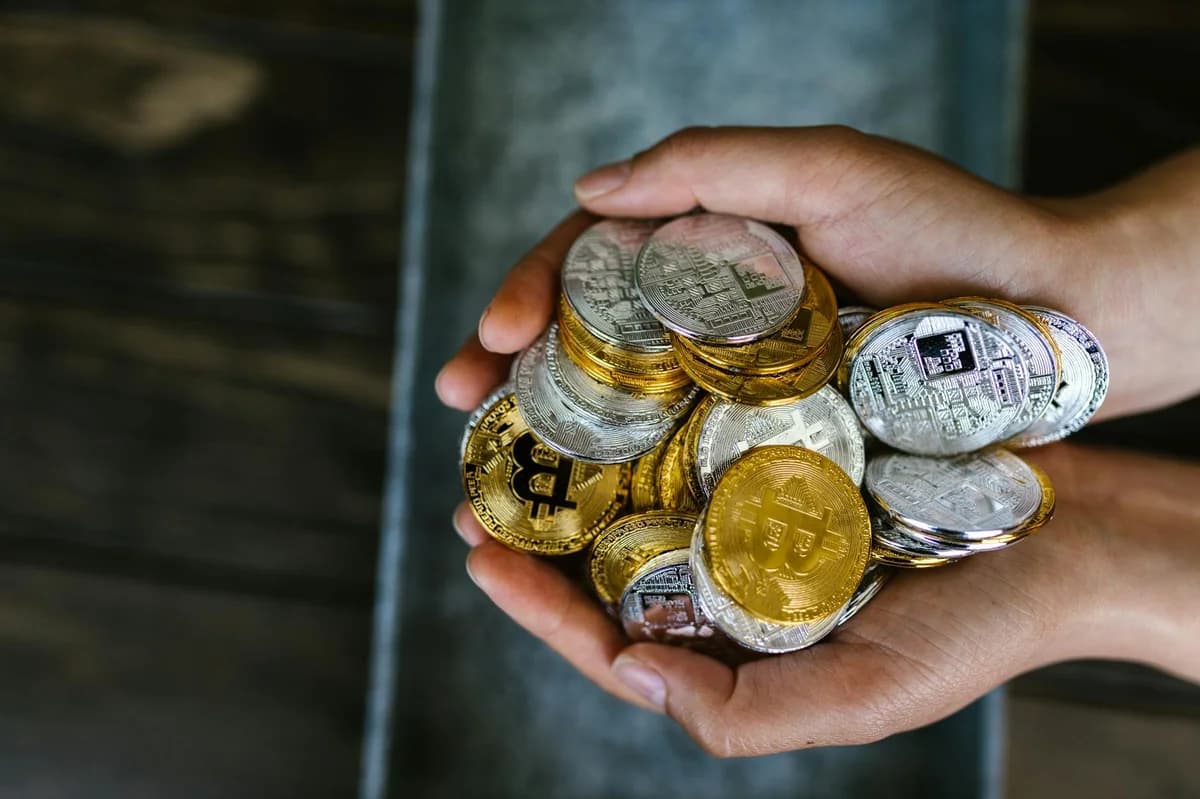
What is Blockchain? A Beginner's Guide to Crypto Essentials
Learn what blockchain is and how it powers Bitcoin, Ethereum, DeFi, NFTs, staking, gas fees, private keys, seed phrases, Layer 2, and yield farming. Clear examples for beginners.

What is Blockchain? A Beginner's Guide to Crypto Essentials
Blockchain is a decentralized digital ledger that records transactions across many computers. This technology underpins cryptocurrencies like Bitcoin and Ethereum, as well as modern innovations such as DeFi and NFTs. Understanding blockchain is the first step to grasping the entire crypto ecosystem.
Blockchain and Bitcoin: The First Use Case
Blockchain introduced the world to Bitcoin, the first decentralized digital currency. In this system, transactions are grouped into blocks and linked together in a chain. Miners solve complex puzzles to add new blocks, and the network confirms payments without a bank. For example, when Alice sends a small amount of Bitcoin to Bob, the transaction is broadcast to thousands of nodes. Each node checks that Alice has enough funds and that she hasn’t already spent them – a problem known as double-spending. Once verified, the transaction becomes part of an immutable block. This trustless mechanism eliminates the need for a central authority, giving users direct control over their money.
Ethereum Blockchain: Expanding Possibilities
Ethereum took blockchain beyond simple payments by introducing smart contracts – self-executing agreements written in code. While Bitcoin’s blockchain mainly tracks ownership, Ethereum’s blockchain can run programs. For instance, a developer can deploy a contract that automatically sends funds when certain conditions are met, like paying rent on the first of each month. Every interaction on Ethereum requires a small fee (gas) to compensate miners or validators. This programmability opened the door to decentralized applications (dApps) and fueled the growth of the wider crypto economy.
DeFi and Yield Farming on the Blockchain
DeFi (decentralized finance) recreates traditional financial services – lending, borrowing, trading – using smart contracts on a blockchain. Users interact directly with these contracts instead of banks. A practical example: you deposit your cryptocurrency into a liquidity pool and in return earn a share of the transaction fees. This process is called yield farming. Yields are typically higher than what a savings account offers, but they also carry risks like volatile asset prices and smart contract bugs. DeFi runs on blockchains such as Ethereum and Solana, making financial services accessible to anyone with an internet connection.
NFTs: Blockchain Ownership for Digital Art
NFTs (non‑fungible tokens) represent unique digital items on a blockchain. Unlike cryptocurrencies where one coin is identical to another, each NFT has a distinct identifier that proves ownership. For example, a digital artist can mint a piece of art as an NFT, and a collector can buy it. The blockchain records the transfer, showing who owns the original work. This system gives creators royalties on future sales and allows buyers to prove authenticity. Most NFTs live on the Ethereum blockchain, though other chains like Polygon and Flow also support them.
Staking and Gas Fees on the Blockchain
Staking is a process where users lock up their cryptocurrency to help secure the network and earn rewards. It works on proof‑of‑stake blockchains like Ethereum (after its upgrade) and Solana. For instance, you can stake your ETH with a validator; the network periodically rewards you with more ETH for your contribution. Gas fees are the costs required to make transactions or run smart contracts. These fees fluctuate with network demand – during busy times they can become very expensive. To save on gas, users often choose to transact during off‑peak hours or use Layer‑2 solutions.
Private Keys and Seed Phrases: Securing Your Blockchain Assets
Your private key is a long string of numbers and letters that lets you sign transactions and control your cryptocurrency. Think of it as the password to your digital wallet, but one that cannot be reset. If you lose your private key, you lose access to your funds forever. A seed phrase (or recovery phrase) is a human‑readable backup – usually 12 or 24 words – that can regenerate your private key. For example, if your phone breaks, you can restore your wallet on a new device by entering the seed phrase. Treat your seed phrase like the combination to a safe: never share it online, and store it offline in a secure location.
Layer 2 Scaling on Blockchain: Solving Congestion
As blockchains become popular, they can get congested – like a highway during rush hour. Layer 2 solutions are secondary protocols built on top of a blockchain to handle transactions off the main chain, then post the final results back. A common example is the Lightning Network for Bitcoin, which enables instant micro‑payments. For Ethereum, Optimistic Rollups and zk‑Rollups bundle many transactions into a single batch, drastically reducing gas fees. Users enjoy faster and cheaper transactions while still relying on the security of the underlying blockchain.
Blockchain is the foundational technology behind a rapidly growing digital economy, from Bitcoin and Ethereum to DeFi, NFTs, and beyond. By understanding how blocks, keys, and fees work, beginners can navigate this space with confidence and explore the innovations built atop this decentralized ledger.
RELATED ARTICLES

A rug pull is a crypto scam where developers abandon a project after taking investors' money. These schemes exploit trust and hype to create a false sense of legitimacy before vanishing. Understanding how rug pulls work is essential for protecting your funds in decentralized finance (DeFi) and token markets.

Algorand and Pure Proof of Stake: A Beginner's Guide