Range Order on Uniswap v3 Explained for Beginners
Learn what a range order is on Uniswap v3, how it differs from a limit order, and see a practical example. Understand risks and when to use this concentrated liquidity tool.
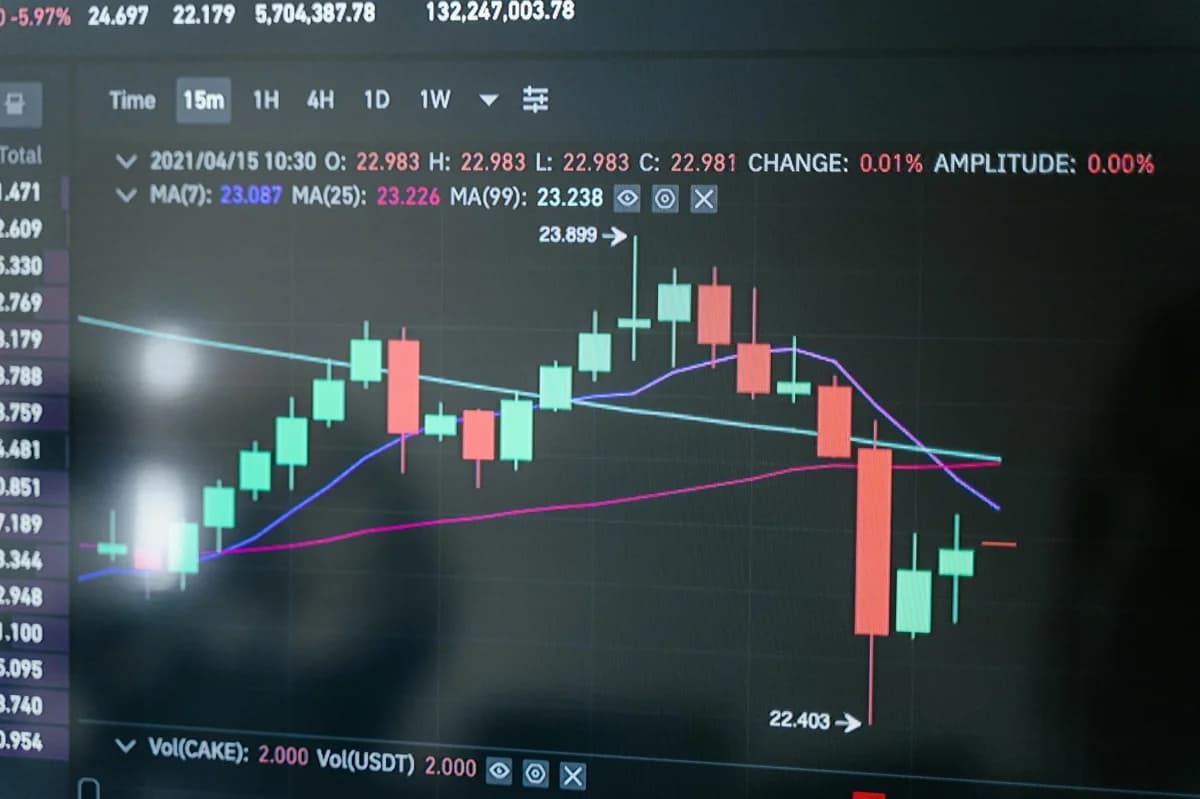
Range Order on Uniswap v3 Explained for Beginners
Range order on Uniswap v3 is a liquidity provision method that lets you supply tokens only within a specific price range, mimicking a traditional limit order but on a decentralized exchange. Instead of offering liquidity across all prices (as in Uniswap v2), a range order concentrates your capital into a narrow band, potentially earning higher fees per dollar deposited. This mechanism powers Uniswap v3’s “concentrated liquidity” model and is a key concept for anyone exploring advanced DeFi trading or passive income strategies.

What Makes a Range Order Different from a Limit Order?
A range order shares similarities with a classic limit order on a centralized exchange, but the two are not identical. On a typical order book, a limit order fills at a single price (or better) when the market reaches that level. In Uniswap v3, a range order also targets a specific price band, but instead of matching with a counterparty, it supplies liquidity that earns swap fees while the active price remains inside that band.
| Feature | Limit Order (Centralized) | Range Order (Uniswap v3) |
|---|---|---|
| Execution price | Single price point | A continuous price range |
| Earnings while waiting | None (unless paired with lending) | Swap fees from every trade that passes through your range |
| Capital efficiency | 100% at one price | Concentrated in the band, idle outside it |
| Counterparty risk | Relies on order book | Purely on-chain via automated market maker (AMM) |
The key difference: a limit order is a “one-and-done” transaction that fills once and disappears. A range order stays active indefinitely, collecting tiny fees every time someone swaps inside your chosen range, until the price exits that range and your funds become fully converted.
How a Range Order Works in Uniswap v3

Uniswap v3 introduced concentrated liquidity, allowing LPs to specify the exact price boundaries where their capital is active. A range order is simply a concentrated liquidity position set so that the current price sits at one edge of the range, or the range is deliberately placed where you expect the price to move through.
Here is the step‑by‑step logic:
- You choose a pair (e.g., ETH / USDC) and decide how much of each token to deposit.
- You set a lower price and an upper price – this is your range.
- If the current price is inside the range, your liquidity is active and you earn swap fees proportional to your share.
- When the price moves above the upper bound, your entire position converts entirely into the “base” token (the one that appreciates). For example, if you provided ETH and USDC and price goes above your range, you will hold only USDC – effectively “selling” your ETH at that upper price.
- When the price moves below the lower bound, you end up holding only ETH – effectively “buying” ETH at that lower price.
This behavior mimics a limit order that executes gradually as the price sweeps across the range. If you set a narrow range, the conversion happens faster, but you also risk the price never entering your band.
Breaking Down a Simple Range Order
Consider a liquidity provider who wants to sell ETH above a certain price and buy it below that price. They could:
- Deposit both ETH and USDC such that the price at the upper bound is where they want to sell.
- Wait for the market to push the price upward. As the price rises through the range, their liquidity converts from ETH+USDC into purely USDC.
- Once the price exits the top of the range, the position holds only USDC – the trade is effectively complete.
This is often called a “single‑sided” range order because it behaves like a one‑way swap, even though both tokens were initially provided. In practice, you always deposit both tokens, but the proportion adjusts automatically as the price moves.
Practical Example: Supplying a Range Order
Imagine you believe the price of an altcoin (ALPHA) versus USDC will rise moderately over the next few days. Instead of buying ALPHA outright, you can set a range order to “buy” ALPHA only if it dips slightly, and then “sell” it if it climbs above a target.
Your range might be:
- Lower price: a level 3% below the current market.
- Upper price: a level 5% above the current market.
You deposit equal value of ALPHA and USDC (technically in a ratio that matches the current price). As long as the price stays inside this band, you earn swap fees. If the price drops to your lower bound, your liquidity converts entirely into ALPHA – you’ve “bought the dip”. If the price then rises and exits the upper bound, the position flips back to 100% USDC – you’ve sold at your target.
Key point: You do not need to monitor the market constantly. The AMM executes the conversion automatically over time as trades occur within your range. This is a powerful tool for automated DCA (dollar‑cost averaging) or for executing a simple price‑target strategy without gas costs for each order.
Setting Up the Range on the Uniswap v3 Interface
- Go to the Uniswap v3 “Pools” page and click “New Position”.
- Select your token pair.
- Choose “Custom” for the price range instead of “Full Range”.
- Enter your lower and upper price using the chart or manually.
- Check the “Deposit Amounts” box – the interface will show how much of each token you need to provide.
- Confirm the transaction. Your range order is now live.
As a beginner, start with a wide range (e.g., ±20% around the current price) to reduce the chance of the price exiting immediately. Narrow ranges earn higher fee density but carry more risk.
Risks of Using Range Orders on Uniswap v3
While range orders can be more capital‑efficient than full‑range liquidity, they come with specific risks:
- Impermanent loss (IL) : Because your tokens are concentrated, the price difference between entry and exit can cause a loss compared to simply holding the tokens. This is magnified when the price passes through your range and leaves you with only one token – you might have been better off holding both.
- Price exiting your range: If the market moves beyond your chosen bounds, your liquidity becomes idle. You stop earning fees and your position is stuck as a single token until you manually adjust or the price re‑enters.
- Gas costs: Setting up a range order requires a transaction that can become very expensive during network congestion. Combining multiple adjustments adds costs.
To mitigate these risks, use range orders only when you have a clear directional view or when you intend to capture fees in a relatively stable price range. Avoid setting extremely narrow bands on volatile pairs.
When to Use a Range Order vs a Standard Limit Order
- Use a range order when you want to earn swap fees while waiting for the price to hit your target, or when you want to automate a two‑way trade (buy low, sell high) without active monitoring.
- Use a standard limit order (via a DEX aggregator) when you need immediate, guaranteed execution at a single price, and you do not care about earning fees on the capital while it waits. Centralized limit orders also avoid gas costs, but they require trust in the exchange.
For many DeFi users, a range order is ideal for placing passive “buys” and “sells” on a DEX that still lets you profit from trading activity. It is a flexible tool that bridges the gap between a simple limit order and a full liquidity provision strategy.
Range order on Uniswap v3 offers a novel way to provide concentrated liquidity while executing price‑target strategies automatically. By understanding how your tokens convert as the price moves through your chosen band, you can design positions that earn fees, reduce exposure to impermanent loss in certain directions, and mimic traditional limit orders on a fully permissionless platform.