What Is Impermanent Loss and How to Minimize It
Learn what impermanent loss is in DeFi liquidity pools, how it happens, and proven strategies to minimize it. Includes practical examples and a simple calculation table for beginners.
What Is Impermanent Loss and How to Minimize It
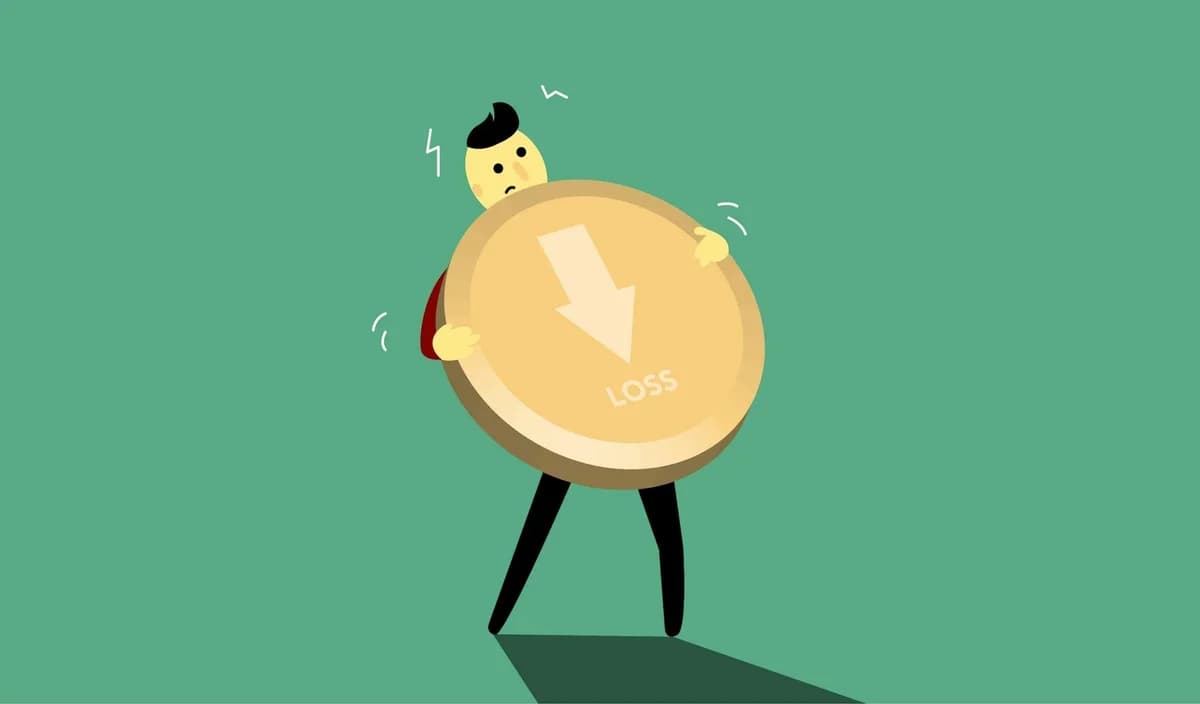
Impermanent loss is a temporary reduction in the value of your liquidity pool holdings compared to simply holding the tokens outside the pool. It occurs in automated market maker (AMM) protocols when the price ratio of the two deposited tokens changes after you add liquidity. Understanding this concept is essential for anyone providing liquidity in decentralized finance (DeFi), as it directly affects your net returns.

What Causes Impermanent Loss in Liquidity Pools?
Impermanent loss arises from the constant product formula used by most AMMs, such as Uniswap and PancakeSwap. When you deposit two tokens into a pool, you are paid trading fees. However, if the price of one token changes relative to the other, the pool automatically rebalances your share, leaving you with more of the depreciating token and less of the appreciating one. This divergence from simply holding the tokens is what we call impermanent loss, and it becomes worse the larger the price change becomes.
The Math Behind Impermanent Loss
Consider a pool with Token A and Token B. You deposit an equal value of both. If Token A doubles in price against Token B, arbitrage traders will buy Token A from the pool until the price matches the market. After rebalancing, your share of the pool contains fewer Token A and more Token B than you originally deposited. The total value of your LP position is now less than the value of simply holding the original amounts of Token A and B outside the pool. The loss is considered “impermanent” because if prices return to their original ratio, the loss disappears and you again have the same value as holding. However, if you withdraw while prices are still changed, the loss becomes permanent.
How to Calculate Impermanent Loss Without Spreadsheets
You do not need to memorize formulas to gauge impermanent loss. The key relationship is that the loss depends solely on the price ratio change between the two tokens, not on the direction of the change. A 2x price change in either direction results in the same loss. Below is a simplified table showing the approximate impermanent loss for various price ratio changes.
| Price Ratio Change (x times) | Approximate Impermanent Loss |
|---|---|
| 1.25x | 0.6% |
| 1.50x | 2.0% |
| 2.00x | 5.7% |
| 3.00x | 13.4% |
| 4.00x | 20.0% |
| 5.00x | 25.5% |
As the table shows, a small price change (e.g., 1.25x) causes only a tiny loss, while a drastic swing (e.g., 5x) can cost you over a quarter of your potential holding value. The loss is never more than 100% — you cannot lose more than the value of your deposit through impermanent loss alone, but combined with falling token prices, your position may still decrease.
Practical Strategies to Minimize Impermanent Loss
Several approaches can help you reduce the impact of impermanent loss, especially if you are providing liquidity for the long term.
- Choose stablecoin pairs. Pools with two stablecoins (e.g., USDC/DAI) have very low price volatility, so impermanent loss is negligible. The trade-off is that trading fees are also lower.
- Deposit into pools with correlated assets. If the tokens tend to move together (e.g., ETH and stETH), the chance of a large price divergence is smaller. This reduces, though does not eliminate, impermanent loss.
- Provide liquidity only when you earn high trading fees. If the pool’s trading volume is large relative to the potential loss, the fees can compensate for the impermanent loss. Look for pools with high volume and deep liquidity.
- Use single-sided staking or vault strategies. Some protocols offer yield farming without exposing you to two-sided impermanent loss, such as lending platforms or tokenized LP positions that can be hedged.
- Monitor and rebalance actively. If you see one token appreciating rapidly, you can withdraw and re-deposit at a new ratio. This resets the “reference point” and locks in current gains, but you will incur transaction costs.
💡 Pro Tip: Consider providing liquidity in pools where the two tokens are strongly correlated, such as stablecoins or wrapped versions of the same asset, to virtually eliminate impermanent loss. Even a small correlation can significantly reduce the risk compared to volatile pairs.
When Impermanent Loss Becomes Permanent
Impermanent loss only becomes permanent if you withdraw your liquidity while the price ratio is still different from your deposit ratio. If you wait until the tokens return to their original price ratio, the loss disappears entirely. However, the loss is not truly “permanent” if you exit early — it is simply realized. Many beginners mistakenly think impermanent loss is always temporary; in reality, if a token never returns to its original price, the loss is locked in. For example, if you deposit into a volatile pair and one token loses 90% of its value, you will exit with a heavy loss that cannot be recovered by waiting longer. Therefore, understanding the underlying assets and market conditions is crucial before adding liquidity.
Conclusion
Impermanent loss is a fundamental risk for liquidity providers in DeFi, but it is not unavoidable. By choosing stable or correlated asset pairs, focusing on high-fee pools, and actively managing your positions, you can minimize its impact. Remember that impermanent loss is only one part of the equation — you must also consider trading fees, token appreciation, and potential impermanent gain if the price moves in your favor. Learn the mechanics, test with small amounts, and always keep your portfolio strategy aligned with your risk tolerance.