What Are Bollinger Bands in Crypto Trading?
Learn what Bollinger Bands in crypto trading are, how they work, and how to use them for volatility analysis and trade signals. A beginner-friendly guide with practical examples.
What Are Bollinger Bands in Crypto Trading?
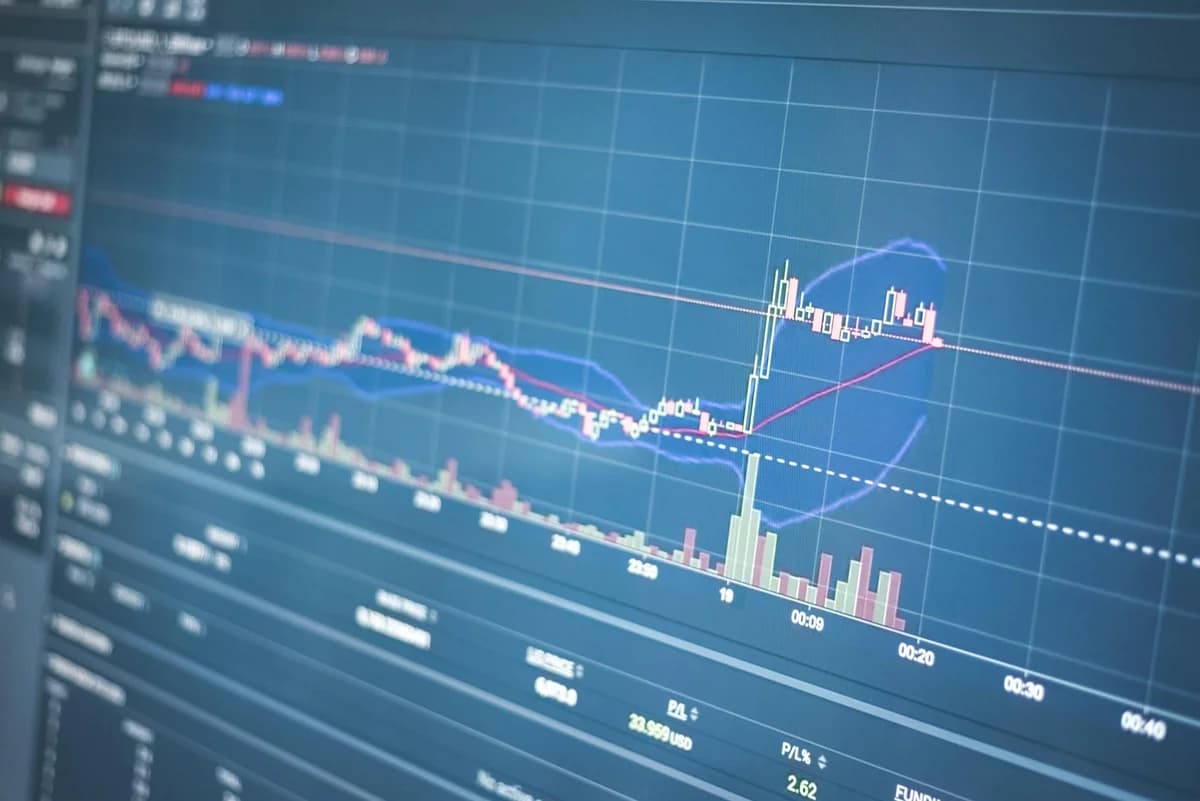
Bollinger Bands in crypto trading are a popular technical analysis tool that helps traders assess volatility and identify potential overbought or oversold conditions. Developed by John Bollinger in the 1980s, the indicator consists of three lines plotted on a price chart to visualize price ranges over time. For beginners, understanding how these bands work can provide a clear edge in spotting breakout opportunities and managing risk.
How Bollinger Bands in Crypto Trading Are Constructed
Bollinger Bands are built from two main components: a Simple Moving Average (SMA) and standard deviation, which measures how much the price deviates from its average. The three lines are:
- Middle Band: A 20-period SMA (default setting).
- Upper Band: Middle band plus two standard deviations.
- Lower Band: Middle band minus two standard deviations.
The choice of a 20-period lookback and a multiplier of 2 is standard, but traders can adjust these for different timeframes. The bands expand and contract automatically as volatility changes. When price moves sharply, the bands widen; when price consolidates, they narrow.
| Band | Calculation | Purpose |
|---|---|---|
| Upper | SMA(20) + 2 * σ | Identifies potential overbought levels |
| Middle | SMA(20) | Core trend direction |
| Lower | SMA(20) - 2 * σ | Identifies potential oversold levels |
Note: σ = standard deviation of price over the same 20 periods.
Interpreting Bollinger Bands for Crypto Trades
The primary use of Bollinger Bands is to gauge relative price levels. A price hitting the upper band does not guarantee a reversal; it simply indicates that the asset is trading at a higher price than usual relative to recent history. Similarly, touching the lower band suggests a relatively low price.
Key signals traders look for include:
- Bollinger Squeeze: When the bands contract into a narrow range, it often precedes a sharp breakout. The direction of the breakout is uncertain, so traders wait for a strong candle close outside the bands.
- Riding the Bands: During strong trends, price may “walk” along the upper or lower band for several periods, signaling sustained momentum.
- Reversal at Extremes: After a prolonged touch of the upper band, a bearish candle closing back inside the bands can indicate a potential pullback.
Remember, Bollinger Bands are not predictive—they simply show current volatility and relative price levels. Combine them with other tools for confirmation.
A Practical Example Using Bollinger Bands
Imagine you are watching a crypto asset that has been trading in a narrow sideways pattern for several days. The bands have contracted to their tightest range in weeks, forming a Bollinger Squeeze. This signals that a volatile move is approaching. You wait for a decisive breakout.
One morning, a large green candle closes firmly above the upper band on higher-than-average volume. This confirms a bullish breakout. You decide to enter a long position, setting a stop-loss just below the recent squeeze low (or below the middle band). Over the next few sessions, the price continues trending upward while riding the upper band. Eventually, a red candle closes back inside the bands, suggesting momentum is fading—time to take profits.
Had the breakout been to the downside (a red candle closing below the lower band), the same logic would apply for a short trade. The key is to wait for a confirmed close outside the bands, not just a touch.
Common Mistakes Beginners Make with Bollinger Bands
New traders often misuse Bollinger Bands because they treat every band touch as a trade signal. Avoid these pitfalls:
- Buying at the upper band, selling at the lower band: In a strong uptrend, price can stay above the upper band for many bars. Selling prematurely caps gains.
- Ignoring the overall trend: Bollinger Bands work best when aligned with the broader market direction. In a downtrend, a bounce off the lower band may be a short-term pullback, not a reversal.
- Using default settings blindly: A 20/2 setting is a good starting point, but shorter timeframes may require a smaller lookback (e.g., 10) or a different multiplier (e.g., 2.5) to avoid false signals.
- Neglecting volume: A breakout with low volume is more likely to fail. Always check volume alongside band behavior.
Combining Bollinger Bands with Other Indicators
No single indicator is perfect. To improve accuracy, pair Bollinger Bands with complementary tools:
| Indicator | How It Complements Bollinger Bands |
|---|---|
| Relative Strength Index (RSI) | RSI above 70 when price touches the upper band strengthens the overbought signal; RSI below 30 reinforces an oversold condition. |
| Volume | A squeeze breakout on rising volume confirms genuine interest; low volume suggests a false move. |
| Moving Average Convergence Divergence (MACD) | MACD crossovers that occur during a squeeze can validate the breakout direction. |
For example, if price closes above the upper band while RSI is above 70 and volume spikes, the bullish signal is stronger. Conversely, if RSI is neutral (40–60), a breakout may lack conviction.
Conclusion
Bollinger Bands in crypto trading offer a straightforward way to visualize volatility and spot potential turning points. By understanding how the bands are built, recognizing squeeze patterns, and combining them with other indicators, beginners can make more informed decisions. Remember that no tool guarantees profits—always manage risk with stop-losses and position sizing. As you practice on historical charts, you’ll develop an intuition for when the bands are most useful.