What Is a Crypto Market Cycle? A Beginner's Guide
Learn the four phases of the crypto market cycle—accumulation, markup, distribution, and markdown—with practical examples to help you invest with confidence.

What Is a Crypto Market Cycle? A Beginner's Guide
Crypto market cycle is a recurring pattern of price movements and investor sentiment that plays out across the digital asset space. These cycles typically span several months to years and are driven by a mix of technological developments, media hype, regulatory news, and broader economic factors. Understanding these phases helps beginners avoid emotional buying and selling, turning a confusing rollercoaster into a predictable roadmap.
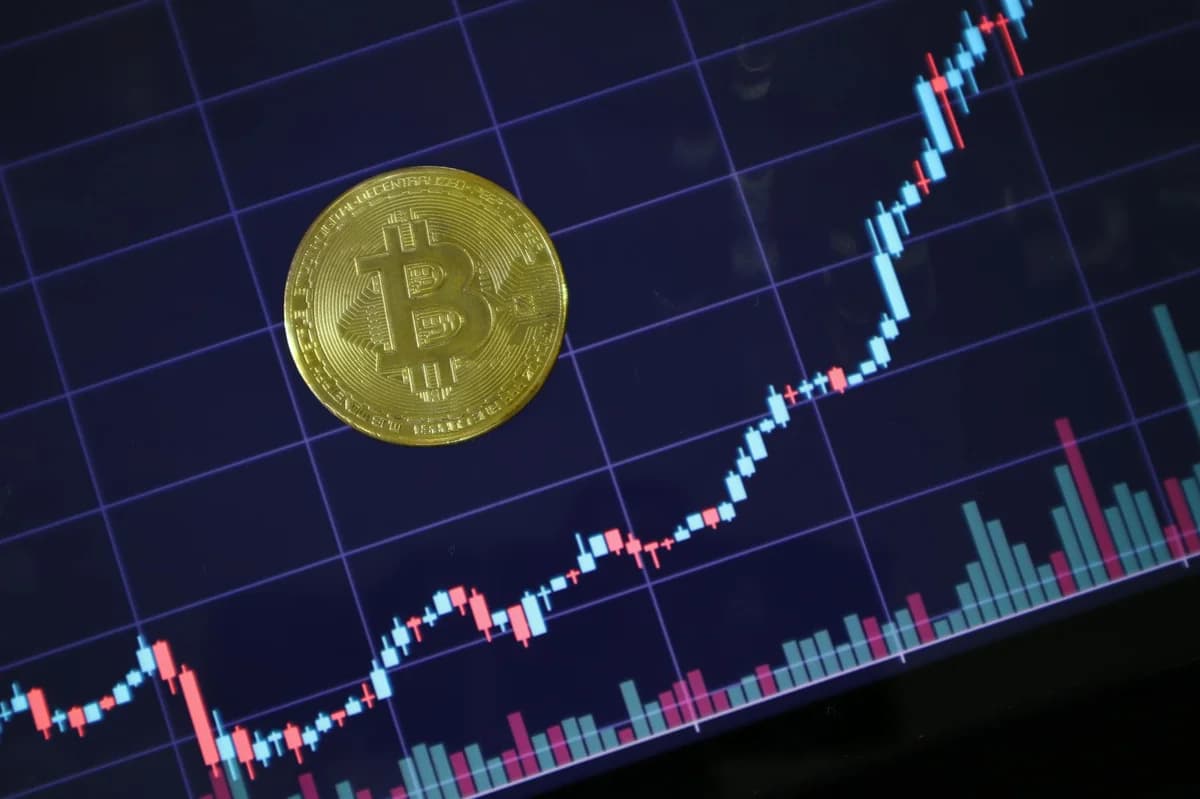
The Four Phases of a Crypto Market Cycle
Every crypto market cycle unfolds in four distinct stages, much like the seasons of the year. While the exact timing varies, the psychological and behavioral patterns repeat reliably.
Accumulation Phase (The Quiet Start)
After a prolonged downtrend, prices have fallen to what feels like a "bottom." Most retail investors have given up, media coverage is negative or nonexistent, and trading volumes are low. Smart money—seasoned investors and institutional players—quietly begin buying undervalued assets. This phase is often called the "bear market" in common parlance.
- Typical signs: Low volatility, sideways price action, little social media chatter.
- Investor emotion: Fear, despair, or indifference.
- Risk: Prices can still drop further, but the potential reward is highest here.
Markup Phase (The Bull Run Begins)
As accumulation continues, positive news starts to break—a major exchange listing, a regulatory green light, or a technical upgrade. Prices break out of their trading range, and momentum traders enter the market. The crypto market cycle now enters its most dramatic phase: a steep upward climb often punctuated by "pump and dump" episodes.
New investors flood in, drawn by headlines of fast gains. Social media explodes with price predictions and "moon" memes. This phase can last months, with corrections that shake out weak hands before the next leg up.
- Typical signs: Rapid price increases, rising trading volumes, increasing media coverage.
- Investor emotion: Optimism, greed, FOMO (fear of missing out).
- Risk: Late entrants often buy near the top.
Distribution Phase (The Great Handoff)
Price reaches a peak that feels unsustainable to many, yet euphoria drives it even higher. The media runs stories of overnight millionaires. New initial coin offerings (ICOs) or token launches flood the market. Now, the smart money that bought in accumulation quietly sells into the buying frenzy—a process called distribution.
Volume remains high, but the price struggles to make new highs. Volatility increases as big players unload their bags. This is the most dangerous phase for newcomers, because everything still looks good on the surface.
| Phase | Typical Price Behavior | Dominant Investor Emotion | Key Activity |
|---|---|---|---|
| Accumulation | Sideways / Slightly rising | Fear or indifference | Smart money buys |
| Markup | Strong uptrend | Greed / FOMO | Momentum traders chase |
| Distribution | Choppy / Topping | Euphoria | Smart money sells |
| Markdown | Steep decline | Panic / Denial | Late sellers exit |
Markdown Phase (The Crash)
Selling accelerates as the distribution reaches its conclusion. Prices break below key support levels, triggering stop-losses and forced liquidations. Panic selling takes over. Media turns bearish again, reporting on hacks, regulatory crackdowns, or "the end of crypto." This phase often overshoots to the downside, creating new accumulation opportunities for the next cycle.
- Typical signs: Cascade of red candles, rising fear index, exchange outflows.
- Investor emotion: Panic, despair, anger.
- Risk: Selling at the bottom locks in losses—exactly what smart money avoids.
Why Understanding the Crypto Market Cycle Matters
Recognizing the crypto market cycle transforms a beginner's approach from gambling to strategic investing. Without this framework, you might buy at the top during euphoria and sell at the bottom during panic—exactly opposite of what produces consistent returns.
Emotional Discipline Becomes Second Nature
When you know that fear and greed follow a predictable rhythm, you can deliberately act against the crowd. For example, during the markdown phase, instead of panic-selling, a cycle-aware investor sets limit orders at prices far below current levels. During the markup phase, they take partial profits rather than doubling down.
Better Risk Management Across Time
A clear understanding of the cycle helps you allocate your capital wisely. Bold this: In accumulation, risk is high but potential reward is highest—so you might use a smaller position with a long timeframe. In markup, you tighten stop-losses. In distribution, you reduce exposure. In markdown, you wait on the sidelines or deploy small amounts opportunistically.
| Action | Accumulation | Markup | Distribution | Markdown |
|---|---|---|---|---|
| DCA buying | Yes, aggressively | Yes, but reduce size | No | Wait or small entries |
| Profit-taking | No | Yes, gradually | Yes, aggressively | No |
| Holding | Long-term bag | Core position only | Reduce position | Minimal |
Identifying Your Position in the Crypto Market Cycle
Even beginners can spot where they are in the crypto market cycle by watching a few simple indicators. No single signal is perfect, but combining several gives a reliable snapshot.
Sentiment Gauges
- Fear & Greed Index: When it hits "Extreme Fear" (below 20), you're likely in accumulation or early markdown. At "Extreme Greed" (above 80), you're in late markup or distribution.
- Social media chatter: An explosion of new crypto groups, "to the moon" hashtags, and celebrity endorsements screams distribution. Silence after a crash screams accumulation.
On-Chain Metrics (For Bitcoin and Major Coins)
- MVRV Ratio (Market Value to Realized Value): A ratio below 1 historically marks accumulation zones. A ratio above 3–4 has signaled tops in past cycles.
- Reserve Risk: Low values (below 0.002) coincide with historical bottoms; high values (above 0.02) with tops. You can track this on sites like Glassnode or LookIntoBitcoin.
Simple Price Action Clues
- Increasing volume on green candles during an uptrend is healthy (markup). Decreasing volume on green candles with a flat price suggests distribution.
- Higher lows with lower highs (a symmetrical triangle) often appear during distribution; breaking below the triangle confirms markdown.
- Wicking patterns—long upper wicks on daily candles—indicate sellers overpowering buyers, common near cycle tops.
Practical Example: In early 2021, Bitcoin's MVRV ratio hit 3.9 and the Fear & Greed Index reached 95 (Extreme Greed). That combination had historically preceded a correction. Investors who recognized the crypto market cycle were able to take profits or tighten hedges before the subsequent markdown phase began.
Common Mistakes Beginners Make in a Crypto Market Cycle
Even with a clear framework, it's easy to fall into traps. Here are three pitfalls to avoid:
- Chasing the "next big thing" in late markup. New coins with zero fundamentals often skyrocket during euphoria—then collapse 90%+ in markdown. Stick to assets with real utility.
- Using too much leverage. Leverage amplifies gains in markup but wipes out capital in markdown. A sudden 30% drop (common in crypto) can liquidate an overleveraged position entirely.
- Selling everything in panic during markdown. The biggest gains of the next cycle are bought during the depths of fear. Instead, use dollar-cost averaging (DCA) to build a position when sentiment is lowest.
Conclusion
Crypto market cycle is the heartbeat of digital asset investing—a repeating pattern of accumulation, markup, distribution, and markdown that every participant should understand. By studying sentiment, on-chain data, and price action, beginners can shift from reacting emotionally to planning strategically. Remember: the goal is not to time the exact top or bottom, but to align your actions with the phase you're in. Learn the cycle, and you'll stop being a passenger on the rollercoaster and start being the engineer.