Crypto Trading Terms Beginners Must Know
Learn essential crypto trading terms like market orders, limit orders, stop-loss, and slippage. This beginner's guide explains each term with clear examples to help you trade confidently.
Crypto Trading Terms Beginners Must Know
Crypto trading terms can be confusing for newcomers, but mastering them is essential for navigating markets safely. This guide breaks down the most important vocabulary with practical examples so you can read exchange interfaces, follow tutorials, and make informed decisions without guessing what each word means.
Using an Order Book to Understand Market & Limit Orders
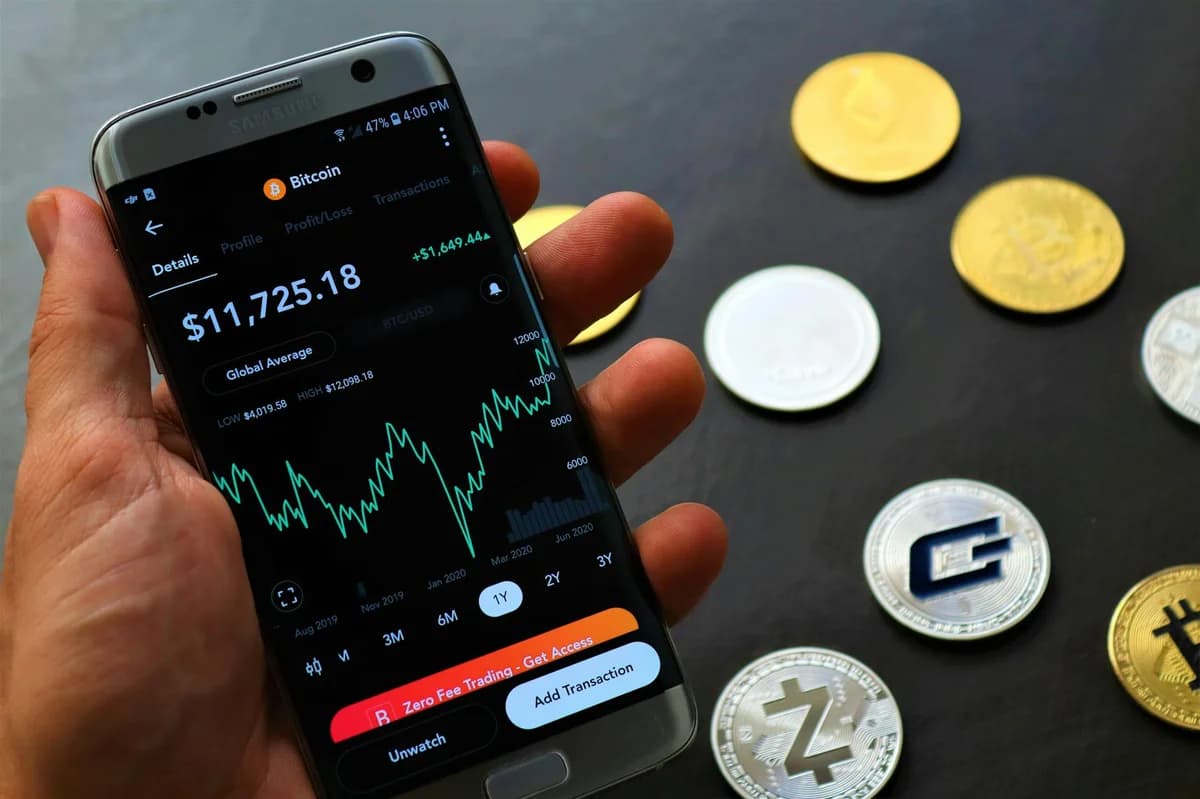
Every crypto exchange displays an order book — a real-time list of buy and sell orders waiting to be matched. On one side you see bid prices (what buyers are willing to pay), and on the other ask prices (what sellers want to receive). The gap between the highest bid and lowest ask is called the spread. A narrow spread usually means high liquidity; a wide spread can indicate a thinly traded asset.
Market Orders
A market order executes immediately at the best available price. Imagine you want to buy 1 ETH. If the lowest ask is $2,500, your market order will fill at that price (or slightly above if multiple orders need to be matched).
Example: You click “Buy Market” for 0.5 BTC. The order book shows bids of $60,000. Your order instantly grabs the cheapest sell orders until 0.5 BTC is filled, possibly at several different prices. The total cost may be slightly higher than you expect — that’s called slippage.
Limit Orders
A limit order lets you set a specific price. You tell the exchange, “Only buy if the price drops to $2,450” or “Only sell if the price reaches $2,550.” The order sits in the order book until someone matches it or you cancel it.
Example: You place a limit order to buy 100 XRP at $0.50. The current price is $0.52. Your order won’t execute unless the market falls to $0.50. If it does, you get XRP at your target price — no slippage, but no guarantee of execution either.
| Order Type | Execution Speed | Price Control | Risk of Slippage |
|---|---|---|---|
| Market | Instant | None | Yes |
| Limit | Delayed / may not fill | Full | None |
Stop-Loss & Take-Profit: Managing Risk Automatically

Two of the most important crypto trading terms for beginners are stop-loss and take-profit. Both are conditional orders that trigger a market or limit order when a certain price is reached, helping you automate profits and limit losses.
Stop-Loss Order
A stop-loss order is designed to protect against large declines. You set a stop price — if the asset falls to that level, your stop-loss becomes a market order to sell.
Example: You bought 1 SOL at $30. To cap your loss at 10%, you set a stop-loss at $27. If SOL unexpectedly drops to $27, the exchange automatically sells your position, turning a paper loss into a realized loss of roughly $3 per token. Without it, a flash crash could take the price to $20 before you react.
Take-Profit Order
A take-profit order works in reverse: it automatically sells when the price reaches a target you choose, locking in gains without constant monitoring.
Example: You bought 0.1 BTC at $50,000. You believe it will rise to $55,000. You set a take-profit limit order at $55,000. If the market reaches that price, your order fills and you secure a $5,000 per BTC profit.
⚠️ Note: Stop-loss and take-profit orders, especially stop-market variants, can still suffer from slippage in volatile conditions. Using stop-limit (where you specify both a stop price and a limit price) gives you more control but may not fill if the market jumps past your limit.
Slippage & Liquidity: Why Order Size Matters
Slippage is the difference between the expected price of a trade and the actual price at which it executes. It happens when the market doesn’t have enough orders to absorb your trade at the desired price. High liquidity — meaning many buyers and sellers — reduces slippage; low liquidity increases it.
- High liquidity assets (e.g., Bitcoin, Ethereum on major exchanges) usually have slippage under 0.1% for modest orders.
- Low liquidity tokens (small-cap altcoins or tokens on decentralized exchanges) can see slippage of 1–5% or more.
Example: You want to buy a newly listed token with a thin order book. The best ask is $1.00, but there are only 10 tokens available at that price. Your order for 100 tokens will eat through those 10 at $1.00, then the next 20 at $1.05, the next 30 at $1.10, and so on. Your average fill price might be $1.08 — that’s slippage of 8%.
To minimize slippage, use limit orders or split large trades into smaller chunks. Many exchanges also display a slippage tolerance setting (common on DEXs) that lets you choose how much price deviation you’ll accept.
Bid-Ask Spread: The Hidden Trading Cost
The bid-ask spread is the difference between the highest price a buyer is willing to pay (bid) and the lowest price a seller will accept (ask). It’s effectively the cost of entering and exiting a trade immediately.
Example: On a crypto pair like ETH/USDT, the highest bid might be $2,500.00 and the lowest ask $2,500.20. The spread is $0.20 (0.008%). If you place a market order to buy, you pay the ask ($2,500.20). If you then immediately sell with another market order, you receive the bid ($2,500.00) — losing the spread. Frequent traders, especially scalpers, pay close attention to spreads because they eat into small profits.
Spreads widen during periods of low liquidity or high volatility. Stablecoin pairs (e.g., USDC/USDT) usually have the tightest spreads because their values are pegged.
Taker vs Maker Fees: How Exchanges Charge You
Exchanges charge fees based on whether you add or remove liquidity from the order book:
- Maker — You place a limit order that sits in the book (adding liquidity). Makers typically pay lower fees, sometimes 0.1% or less.
- Taker — You place a market order or a limit order that immediately matches an existing order (removing liquidity). Takers pay higher fees, often 0.16% or more.
Example: If you set a limit order to buy 1 BTC at $60,000 when the current price is $60,100, you’re a maker because your order waits. If instead you hit “Buy Market” and grab the cheapest sell, you’re a taker. Over many trades, the fee difference can add up — a maker fee of 0.08% versus a taker fee of 0.16% doubles the cost per transaction.
Understanding these crypto trading terms helps you choose the right order type and exchange to minimize fees, especially if you trade frequently.
Conclusion
Mastering crypto trading terms like market orders, limit orders, stop-loss, slippage, bid-ask spread, and maker/taker fees transforms you from a confused beginner into a confident trader. Start applying these concepts on a demo account or with very small amounts to see how each term behaves in real markets. As you practice, these terms will become second nature, helping you execute strategies with precision and avoid costly mistakes.