Spot Trading vs Futures Trading: Crypto Basics
Learn the difference between spot and futures trading in crypto. Understand ownership, leverage, liquidation, and which strategy fits your goals in this guide.
Spot Trading vs Futures Trading: Crypto Basics
Spot trading vs futures trading is a fundamental distinction every crypto trader must understand. While both methods allow you to profit from price movements, they work in completely different ways and carry different levels of risk. This guide breaks down the mechanics, benefits, and pitfalls of each approach so you can choose the right path for your experience and goals.
Spot Trading: Immediate Ownership and Settlement
Spot trading is the most straightforward way to buy and sell cryptocurrencies. When you place a spot trade, you purchase the actual asset — for example, you buy 1 Bitcoin and it appears in your wallet. The exchange immediately settles the trade, transferring ownership from the seller to you.
This method is ideal for long-term investors and beginners because you own the underlying coin. You can hold it for years, transfer it to a hardware wallet, or use it to pay for goods and services. Your profit or loss only materializes when you sell at a different price.
Practical Example of Spot Trading
- You deposit funds on an exchange and place a market order to buy 1 Ether.
- The exchange deducts the cost from your balance and adds 1 Ether to your portfolio.
- If the price of Ether rises, your position gains value. If it falls, you experience an unrealized loss until you sell.
- You can sell at any time, and the proceeds are available immediately.
Key advantage: You are not exposed to expiry dates, margin calls, or complex contract terms. Your risk is limited to the amount you invested — you can never lose more than your initial capital.
Futures Trading: Speculation Without Holding
Futures trading, by contrast, involves contracts that speculate on the future price of an asset without requiring you to own it. A futures contract is an agreement to buy or sell a specific amount of crypto at a predetermined price on a future date. Most crypto futures are cash-settled, meaning you never receive the actual coin — only the profit or loss in cash.
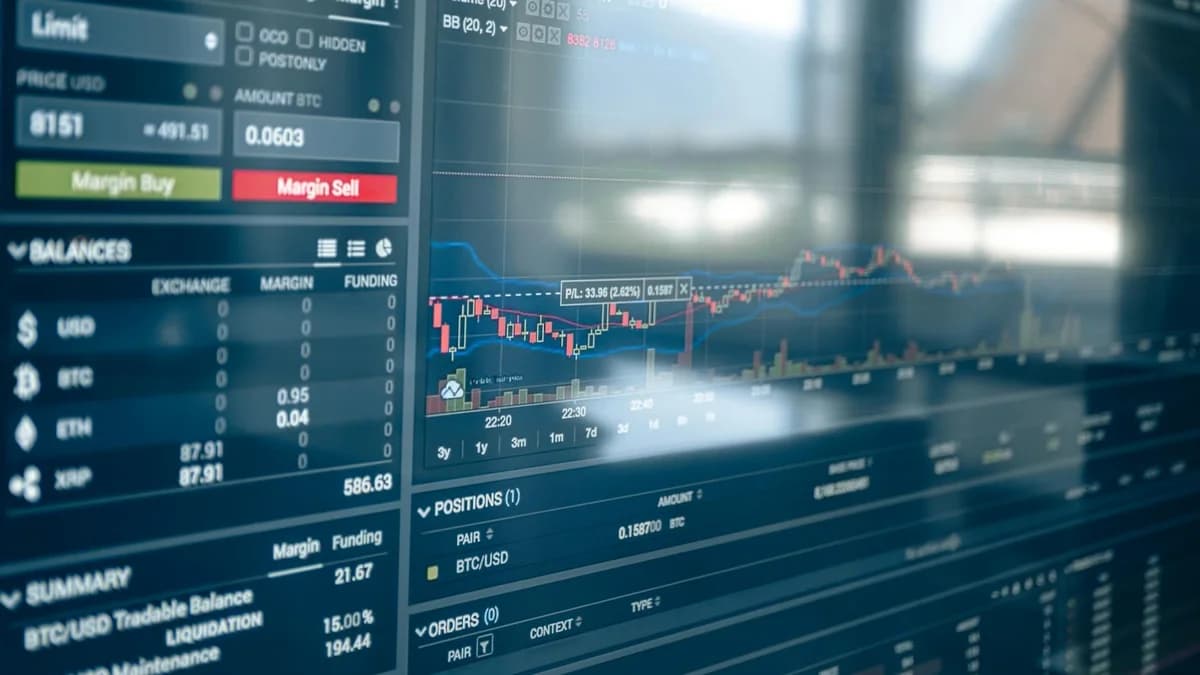
Futures allow you to use leverage, which multiplies your exposure with borrowed funds. For example, with 10x leverage, a 10% price move doubles your gain or loss. This makes futures trading significantly riskier than spot trading.
Practical Example of Futures Trading
- You open a long futures position on Bitcoin with 5x leverage, expecting the price to rise.
- The exchange requires a margin deposit — a fraction of the total contract value.
- If Bitcoin's price increases by 20%, your position value increases by 100% (20% × 5x), and you can close the contract for a profit.
- If Bitcoin's price drops by 20%, your position is liquidated — you lose your entire margin.
Key risk: You can lose more than your initial margin if the market moves against you, especially with high leverage. Many exchanges use liquidation engines that automatically close positions when the margin falls below a threshold.
💡 Pro Tip: Never use leverage on a futures contract until you fully understand how liquidation works. A small price swing can wipe out your entire margin in seconds.
The Role of Liquidation in Futures Trading
Liquidation is a critical concept in futures trading that does not exist in spot trading. When the market moves against your position, your margin decreases. If it drops below the maintenance margin level, the exchange forcibly closes your position to prevent further losses.
Factors That Trigger Liquidation
- Leverage level: Higher leverage means a smaller price move can liquidate you.
- Market volatility: Sudden price swings can cause rapid liquidations.
- Position size: Larger positions require more margin.
For beginners, liquidation often comes as a surprise. A 1% price drop with 100x leverage wipes out your entire position. Spot trading avoids this entirely because you simply hold the asset — you cannot be liquidated.
Spot Trading vs Futures Trading: A Practical Decision Guide
To help you decide which approach fits your situation, here is a comparison table:
| Aspect | Spot Trading | Futures Trading |
|---|---|---|
| Ownership | You own the asset | You own a contract |
| Leverage | None (1:1 exposure) | Available (2x to 100x) |
| Risk | Limited to capital invested | Can exceed initial margin |
| Liquidation | Not possible | Possible if margin falls |
| Time horizon | Unlimited | Contract expiry or open-ended perpetual |
| Tax implications | Simple (capital gains on sale) | Complex (realized/unrealized per contract) |
| Best for | Long-term holders, beginners | Experienced traders, hedging |
Use spot trading if you want to accumulate crypto over time without worrying about leverage. Use futures trading only if you have a clear strategy, risk management plan, and experience with volatile markets.
Comparing Spot and Futures Trading Risks
Both methods carry risk, but the nature differs. Spot trading risk is simple: the asset price goes down. Futures trading introduces additional risks:
- Counterparty risk: The exchange may become insolvent or face liquidity issues.
- Funding rate costs: Perpetual futures contracts have periodic funding fees that can eat into profits.
- Slippage: High leverage positions often use market orders, leading to worse execution prices.
A common mistake among newcomers is treating futures like spot trading. They open a long position expecting to hold indefinitely, but perpetual futures require active management. If you do not monitor the funding rate or liquidation price, you may lose your position even if the price eventually recovers.
Conclusion
Spot trading vs futures trading represents two fundamentally different approaches to crypto markets. Spot trading offers simplicity, ownership, and limited risk, making it the recommended starting point for beginners. Futures trading provides leverage and hedging possibilities but demands a deep understanding of margin, liquidation, and market dynamics. Always start with spot trading, learn the ropes, and only consider futures after you have practiced with small amounts and fully grasped the risks.